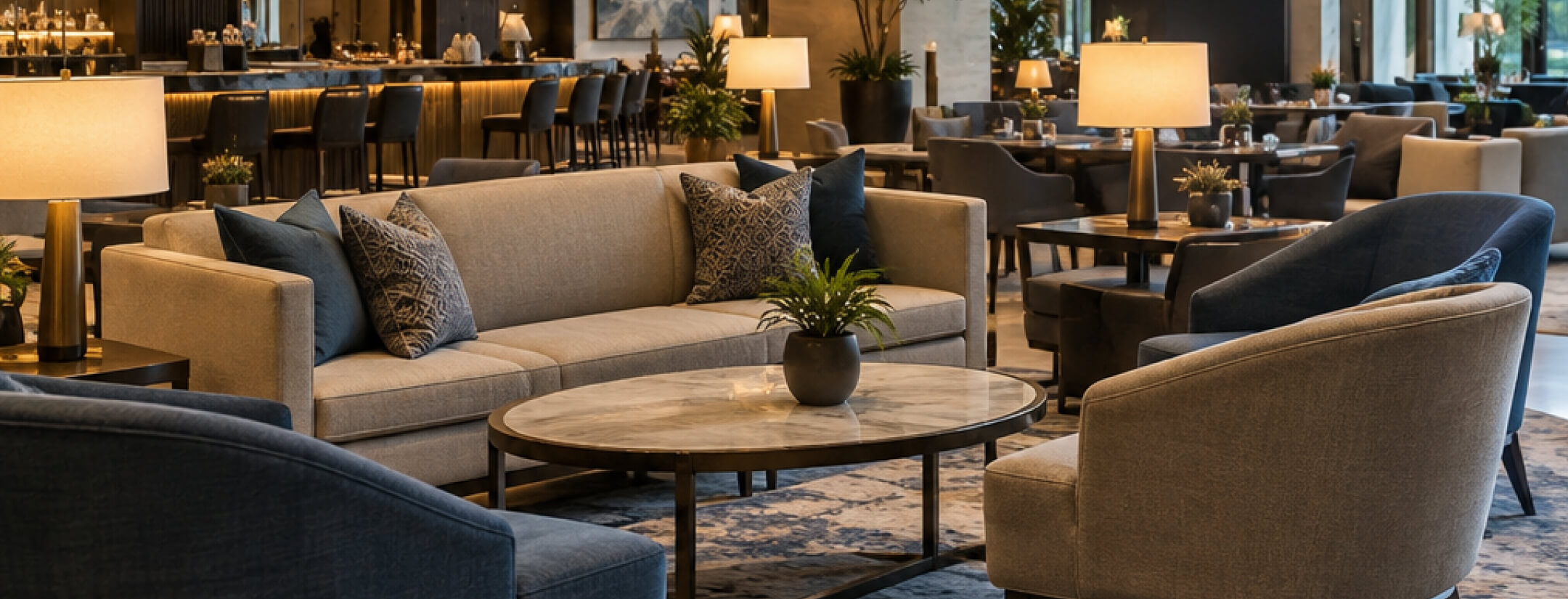
When a hotel group or F&B chain evaluates upholstery fabric for a new property or refurbishment, the conversation looks very different from a homeowner picking a sofa colour. Procurement teams and designers are weighing durability data, certification paperwork, and lead times against a much higher-stakes backdrop: hundreds of guests a day, multiple properties, and furniture that has to perform for years without looking tired. Here's what actually matters to commercial buyers, and why it's a different conversation from a residential one.
Durability Has to Be Proven, Not Promised
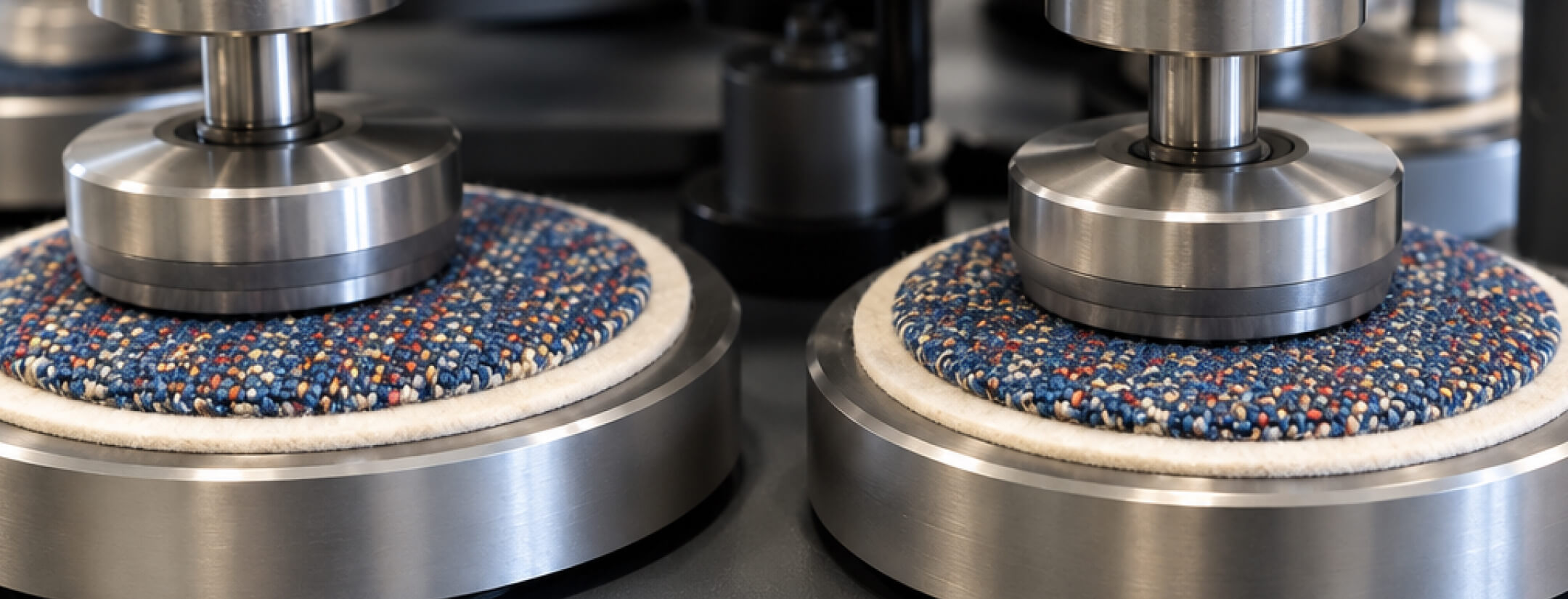
For a family sofa, "it feels sturdy" might be enough. For a 300-room hotel or a multi-outlet F&B chain, that isn't enough on its own. Commercial buyers ask for Martindale rub count data as standard — generally 25,000-plus cycles for genuinely high-traffic seating — because a fabric that needs replacing every 18 months across dozens of properties is a real, recurring cost, not just an inconvenience. (Our upholstery fabric buying guide breaks down what these numbers mean in more detail.)

Certification Isn't Optional — It's Procurement Paperwork
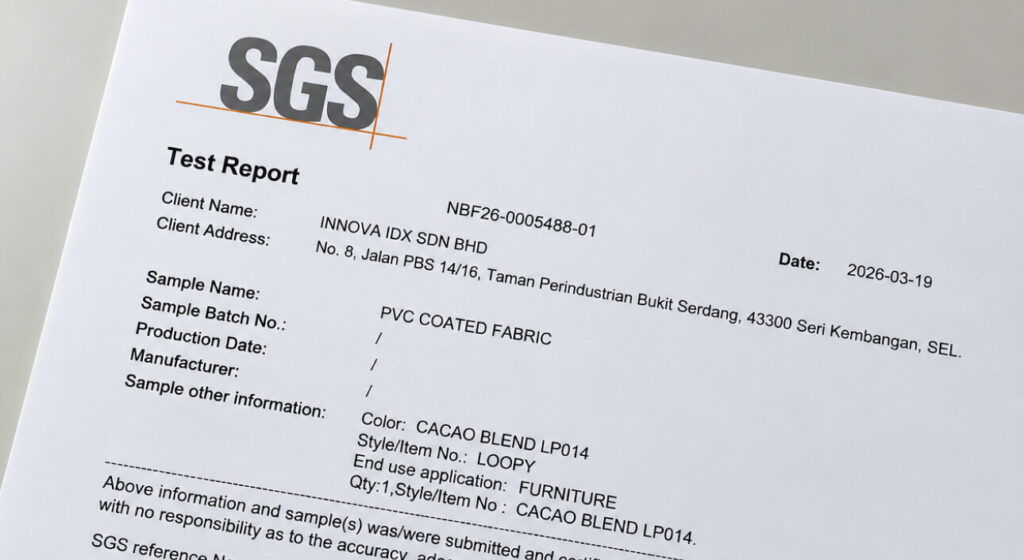
Hospitality and F&B tenders routinely specify independent certification requirements upfront: fire safety compliance, colourfastness ratings. This isn't a nice-to-have — for many commercial projects, a fabric without documented test results simply doesn't get shortlisted, regardless of how it looks or feels in person. If you're supplying into hospitality, having test reports ready to hand over isn't optional.
Consistency Across Properties Matters More Than One-Off Style
A single boutique hotel can afford to be precious about a unique fabric choice. A group with multiple properties — or a franchise-model F&B chain — needs a supplier who can deliver the same colour, weight, and finish consistently across dozens of orders, sometimes years apart as properties get refreshed on a rolling schedule. That's a different relationship than a one-time residential order, and it changes what "the right supplier" actually looks like.
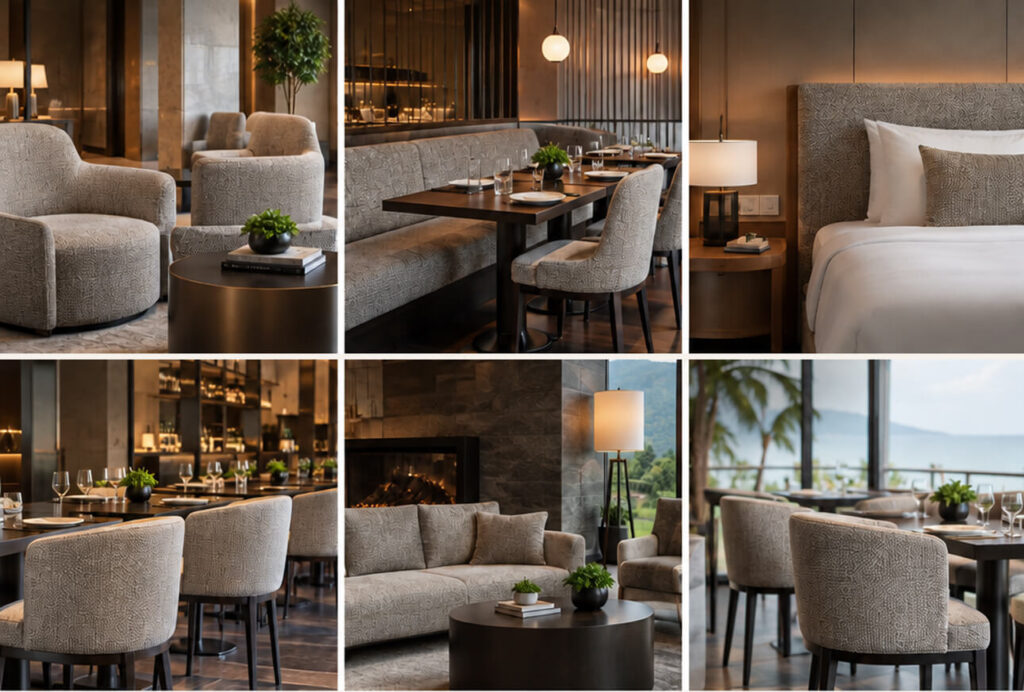
Lead Time Is a Business Risk, Not Just a Timeline
A delayed fabric order for a home renovation is frustrating. A delayed fabric order holding up a hotel refurbishment or a new restaurant opening has a direct revenue cost attached. Commercial buyers weight supplier reliability and stock availability heavily for exactly this reason.
What This Looks Like in Practice
IDX fabrics have been chosen across Malaysia and Singapore's hospitality and F&B landscape — including Shangri-La Hotels & Resorts, The Fullerton Hotel Singapore, Marriott Putrajaya, and Fairmont Singapore on the hotel side, and McDonald's, KFC, Starbucks, and Din Tai Fung across F&B. Different scales of project, same underlying requirements: tested durability, real certification, and a supplier who can deliver consistently at volume. See more of our work with commercial and hospitality clients here.

If You're Specifying for a Commercial Project
Start with the traffic level and certification requirements your project actually needs, then work back to fabric selection — not the other way around. Our team can talk through certification documentation for tender submissions directly, and point you to the right collection for the scale of project you're working on.
Specifying Fabric for a Commercial or Hospitality Project? Send us the project scale and any certification requirements you're working to — we'll get you the documentation and swatches you need for the tender.